

Extra-Low-Voltage Systems Design


Working documentation: from 7 days
Price from 50000 roubles
We design extra-low-voltage (ELV) systems that connect security, communication, monitoring and control functions into one coordinated engineering infrastructure.
AYU-Project develops ELV design documentation for residential, commercial, industrial and infrastructure facilities. The scope can include access control, intrusion alarm, video surveillance, intercom, public address and other low-current systems, coordinated with power supply, HVAC and architectural or structural solutions.
ELV design documentation for access control, CCTV, intrusion alarm, intercom and perimeter security systems
When ELV systems are designed late or only at installation stage, cable routes may conflict with power trays, ventilation ducts or structural elements. Equipment may be purchased before interfaces are clarified, and the final documentation may fail acceptance requirements. Professional ELV design prevents these risks before the installation team arrives on site.
We design extra-low-voltage systems so that the installation team works from coordinated documentation, not from assumptions.
What are extra-low-voltage building systems?
Extra-low-voltage systems are cable and electronic systems used to transmit, process and display information, usually operating at low control voltage. They support facility security, communication, access control, video monitoring, public address and automation interfaces.
A building’s ELV infrastructure includes security, video monitoring, access control and public address subsystems. Design errors in these systems often become expensive because they affect both building operation and final acceptance.
Why do ELV issues often appear on site?
ELV design is often postponed until late in the project. In practice, this creates a chain of avoidable problems:
- ELV cable routes cross power trays or ventilation systems because they were not coordinated at design stage
- equipment arrives after installation has started and turns out to be incompatible with the selected system architecture
- the documentation package is incomplete, and the facility fails acceptance or expert review
- during reconstruction or expansion, the installer cannot reconstruct the as-built configuration because proper record documentation was never prepared
A well-developed ELV design package is not a formality. It is a practical tool for controlling installation cost, reducing clashes and keeping project delivery predictable.
Which ELV systems do we design?
AYU-Project develops design and working documentation for the main security, communication and control systems of a facility:
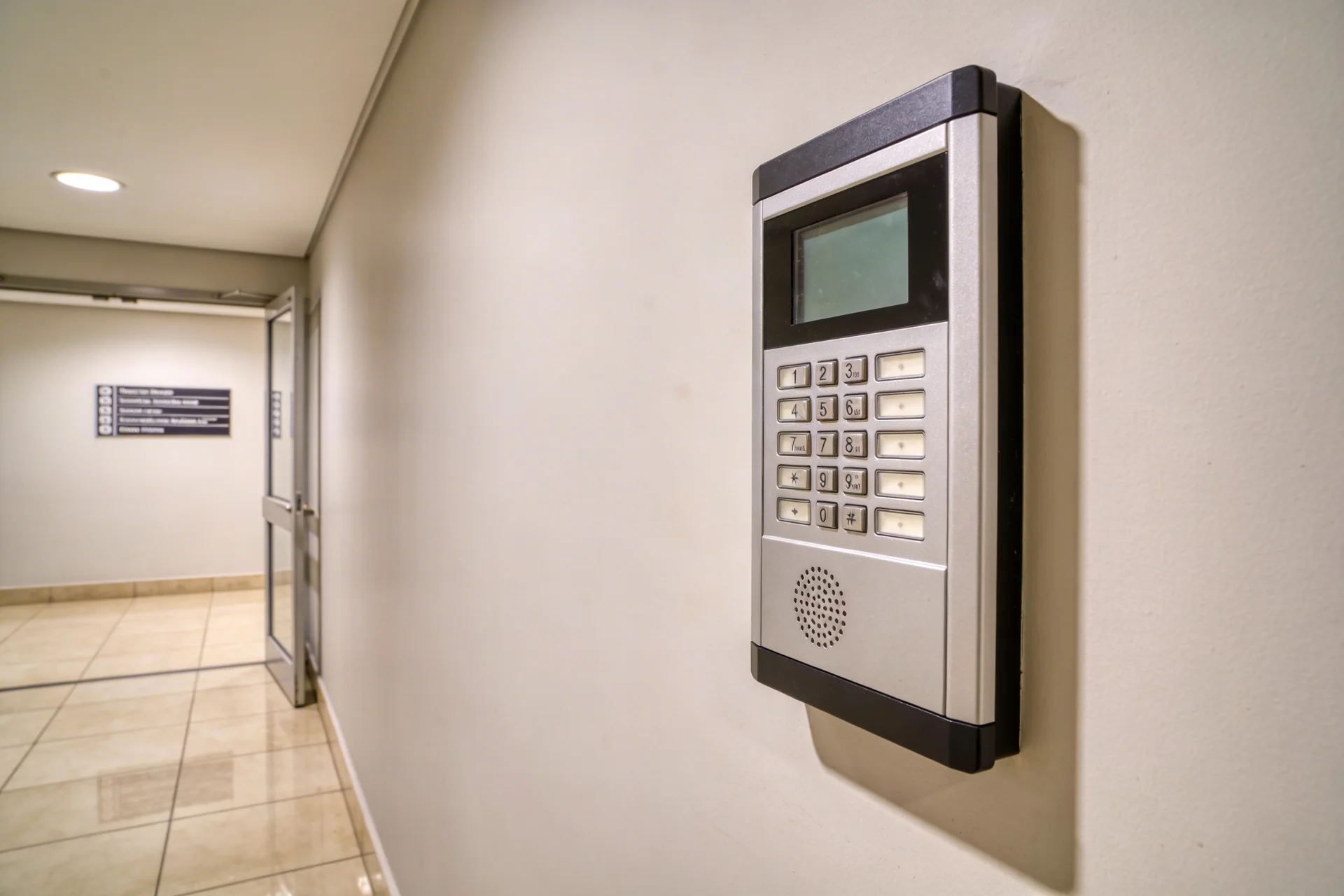
- Access Control and Management System (ACS) - a system of readers, controllers, turnstiles and electromagnetic locks that separates access rights by zone, records entry events and integrates with video surveillance and security systems
- Security and Intrusion Alarm System (SOTS) - a set of security detectors, alarm buttons and control panels that detects unauthorised entry and sends alerts to security staff or a central monitoring station
- Video Surveillance System (SVN) - a network of IP cameras, recorders, storage servers and software for 24/7 monitoring of perimeters, entrances, production areas and commercial zones, with video archive depth defined by the brief
- CCTV System (SOT) - analogue and hybrid video systems based on coaxial cabling, used for facilities with existing infrastructure or specialised video monitoring requirements
- Intrusion Alarm System (SOS) - a dedicated security section with perimeter and volumetric sensors, control panels and alarm transmission channels; designed as a standalone system or integrated with access control and video surveillance
- Intercom (DF) - audio and video communication between entrances and subscriber devices; includes call panels, handsets or monitors, electromagnetic locks and controllers for visitor identification and controlled entry
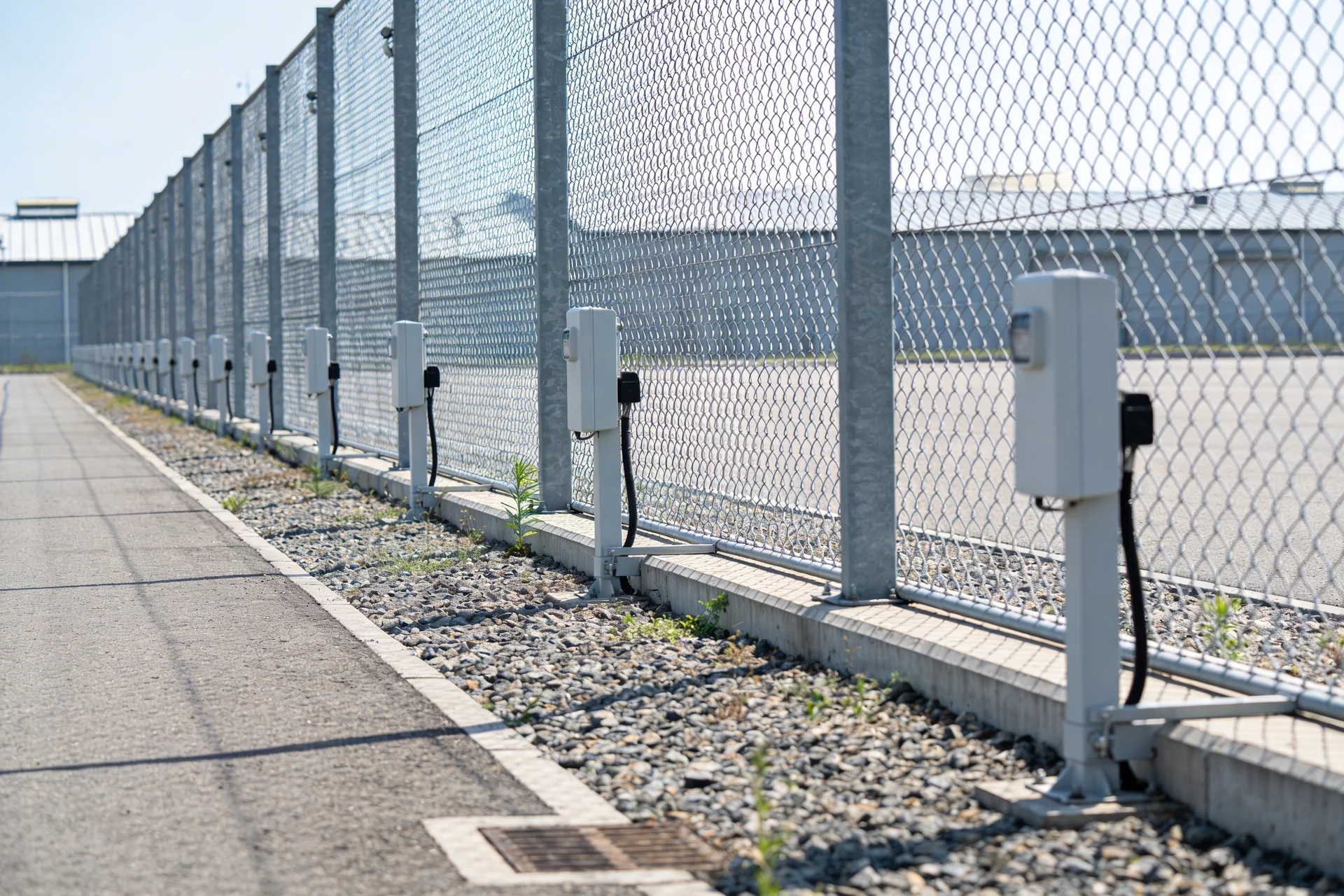
- Perimeter security alarm (TSOP) - a system for external perimeter protection using vibration, infrared or radio-wave sensors, perimeter video analytics and intrusion-detection equipment; used for industrial, logistics and protected facilities
How do ELV security systems work together?
ELV systems deliver the greatest value when they are coordinated. Access-control events can be verified by video surveillance; intrusion-alarm triggers can switch cameras to the alarm zone and initiate access-control scenarios; intercom systems can be integrated with access control for visitor entry.
Coordination with related engineering sections is equally important. ELV cable routes must be designed together with power supply routes, HVAC ducts and structural elements; otherwise installers will face clashes on site. AYU-Project develops ELV sections within one coordinated team, resolving these clashes at design stage.
Our approach to designing extra-low-voltage systems
- We design ELV systems in coordination with other engineering sections - cable routing is developed with power supply routes, air ducts and structural elements in mind; this reduces installation conflicts and protects the general contractor from unplanned rework on site
- We develop documentation in strict accordance with regulatory requirements and expert-review requirements - project documentation is formed according to the requirements of Government Decree of the Russian Federation No. 87 dated 16.02.2008 No. 87 (as amended on 21.10.2025) “On the composition of sections of project documentation and requirements for their content”, working documentation - according to GOST 21.101-2020; the regulatory framework includes WD 78.145-93, WD 78.36.003-2002, PUE 7, GOST R 51241-2008, GOST R 51558-2014, GOST R 53704-2009, GOST R 56602-2015
- We select equipment to suit the client’s budget and the facility’s technical requirements - the specifications include only equipment certified for use in the Russian Federation; if necessary, we study several configuration options, with the differences in performance and installation cost explained
What is included in the design documentation for extra-low-voltage systems?
Depending on the project stage and the client’s objectives, we develop:
- Design documentation - as part of section 5 “Information on engineering equipment” in accordance with RF PP No. 87: an explanatory note justifying the decisions made, schematic diagrams of systems, equipment layout plans, technical and economic indicators - everything necessary for passing state or independent expert review
- Working Documentation Stage (WD) - a complete set for installation work: drawings of cable routes linked to floor plans, installation diagrams, cable logs, specifications with the exact names and quantities of equipment and materials, assignments to related sections for holes and embedded parts
- Technical working project (DD+WD) - combined stage for objects that do not undergo state expert review: an optimal and economically feasible solution for commercial real estate, industrial facilities and reconstruction
For which facilities do we design extra-low-voltage systems?
We design extra-low-voltage systems for:
- administrative and office buildings
- shopping and shopping and entertainment centers
- industrial and manufacturing enterprises
- residential complexes and apartment buildings
- educational and medical institutions
- transport infrastructure: stations, logistics terminals, garage complexes
- objects of government customers: Russian Railways, Rosseti, Ministry of Digital Development and others
Why Does the Construction Industry Choose AYU-Project for Extra-Low-Voltage Systems Design?
AYU-Project is an external design and engineering department for construction and contracting organizations with 17 years of experience in industrial, administrative and infrastructure facilities across Russia. The company is included in the national register of specialists NOPRIZ, has an EMERCOM of Russia license for the right to design fire safety equipment and all the necessary SRO authorizations. The portfolio of completed projects includes objects for Russian Railways, PJSC Rosseti Siberia, FGC, NTEK, Permtransgaz, the Ministry of Digital Development of the Krasnoyarsk Territory and a number of other large government and commercial customers.
- Single command for all low-current sections - ACS, VSS, SIAS, CCTV, IAS, intercom and TSOP are developed within one project office; intersystem linking and coordination of routes with power sections are carried out without losses in transferring tasks to subcontractors
- Regulatory Compliance - documentation is generated according to the current editions of GOST R 51241-2008, GOST R 51558-2014, GOST R 53704-2009, WD 78.145-93 and Government Decree of the Russian Federation No. 87; Expert comments are eliminated free of charge as part of the contract
- Transparent terms and fixed cost - the cost of design is determined at the stage of technical specifications and is not revised; standard sections are produced within a time frame compatible with the general contractor's construction schedule
- Experience on complex objects - the portfolio includes industrial facilities with explosion protection requirements, facilities subject to state expert review, multi-storey residential complexes and facilities with special requirements for the protection of personal data under Federal Law No. 152-FZ
How to order a project for low-current systems: stages of work
- Submit an enquiry - the consultation is free
Form on the website or phone: +7 (383) 375-73-77 / +7 (923) 743-73-77. Specify the type of object and the list of required systems. - Receive a Commercial Proposal Within 1 Business Day
CP with scope of work, price and deadlines. When ordering several subsystems within a single project, you will receive a discount. - Approve the ToR and sign the contract
List of subsystems, stages (DD, WD or technical working draft), equipment requirements, deadlines. - Study of initial data and site visit (if necessary)
Work with floor plans, design briefs and facility features. Departure - in the presence of non-standard conditions or existing systems. - Development of design solutions and selection of equipment
System topology, equipment arrangement, cable routes in connection with power networks and ventilation. Certified equipment for a budget. On request there are two configuration options. - DD Stage Development and Expert Review Support
Explanatory note, schematic diagrams, equipment layout plans, technical and economic indicators according to Government Decree of the Russian Federation No. 87. We eliminate the expert's comments free of charge. - Preparation of Working Documentation (WD) and Delivery to the Client
Route drawings, wiring diagrams, cable logs, specifications with exact part numbers, assignments to related sections. PDF and DWG formats.
Services

Requirements
When designing and installing extra-low-voltage systems, it is essential to follow the requirements of RD 78.145-93, RD 78.36.002-99, PUE, SNiP 3.05.06-85 and GOST 21.101-97.
Low-current networks must meet the following requirements:
- compliance with safety requirements - specifying the necessary connection insulation measures and correct equipment installation in the design;
- ergonomics - no contact between communications systems and other utilities, including sewerage and pressurised water lines;
- creating conditions for uninterrupted operation, including backup generators in the equipment schedule for childcare and healthcare facilities.
All related regulations applicable to the specific facility type must also be observed.
Our Advantages


How We Work
Projects
Frequently Asked Questions
Yes. AYU-Project has membership in SRO for design, specialists are registered in the NOPRIZ register. The company is certified by MChS of Russia for the right to design fire safety equipment, which includes low-current sections of SOUE and security alarm systems.
Yes. The working documentation includes specifications with a complete list and quantity of equipment, cables and materials. If necessary, we work on two configuration options - basic and extended - with justification for the differences in characteristics and the final cost of installation.
To prepare a commercial proposal you will need: floor plans of the building in any format, a list of required extra-low-voltage systems, purpose and approximate area of the facility. If you have a technical specification, please attach it, this will speed up the calculation. We prepare the CP within 1 working day.
Yes. We develop documentation both for the entire complex of low-current systems within a single project, and for individual subsystems - ACS, SOT, SKS, LAN, intercom, TSOP - depending on the client’s current task.
Yes. AYU-Project designs facilities across Russia remotely - based on the client’s documentation or measurement data. If necessary, we will arrange for a specialist to visit for examination and collection of initial data.
Main regulatory framework: RD 78.145-93 (security alarms), RD 78.36.002-99 (technical security equipment), Electrical Installation Code 7, GOST 21.101-2020, GOST R 56602-2015, GOST R 58240-2018 (SKS), SNiP 3.05.06-85. For medical facilities, GOST series P 71215-2024 is used, for warning systems - EMERCOM Russia standards.
For most capital construction projects, communication and security systems are part of the mandatory design documentation in accordance with Government Decree of the Russian Federation No. 87 (as amended on 21.10.2025). The specific list of subsystems depends on the type and purpose of the facility: for a number of facilities, some subsystems are not legally required and are included according to the decision of the client or the requirements of the operating organization.
Stage PD - documentation for expert review: fundamental decisions, justifications, enlarged diagrams and technical and economic indicators. Detailed documentation (RD) - a detailed set for the installation organization: drawings of routes with coordinates, cable logs, installation diagrams, specifications with exact part numbers. For projects with government funding, both stages are required; For private individuals, a technical work project (PD+RD) is often sufficient.
Licences and Certificates


