
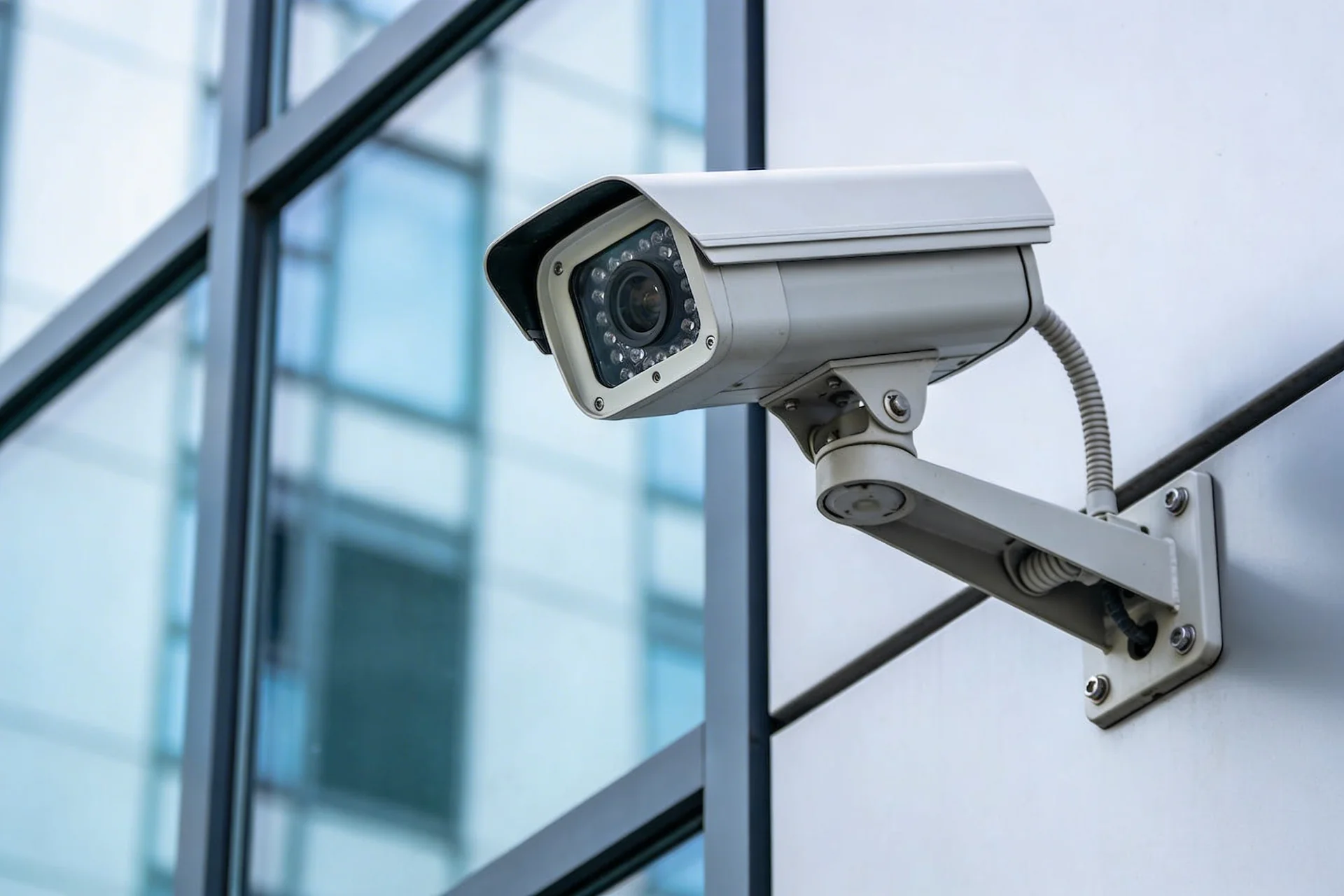
Video Surveillance System (SVN)


Working documentation: from 7 days
Price from 50000 roubles
We design video surveillance systems for any infrastructure - from a local facility to distributed sites, ensuring maximum information content of the image, stability of data storage and ease of control.
We develop video surveillance systems for commercial facilities, industries, public-sector facilities, TTs, residential complexes and geographically distributed sites. Design includes selecting cameras, determining installation locations, routing communication lines, creating a server infrastructure and storage system. Proper design of video surveillance systems ensures reliable control, quick response and long-term operation of the security complex.
CCTV Design (VSS) - Camera Selection, Storage Architecture, Integration and Scalability
The video system is installed, but the image quality in critical areas is unclear. The video archive becomes full within a day because the channel capacity is not calculated. When trying to integrate a video surveillance system with an access control system or security alarm, it turns out that this is technically impossible - there are no agreed upon protocols. Or in six months you need to add another 20 cameras, but the network infrastructure does not allow this to be done without a complete rework.
This happens when a video surveillance system is designed without calculations and analysis. We design VSS so that it works smoothly, integrates with other systems and grows with the facility.
What is a video surveillance system and why design one?
A video surveillance system is a complex of video cameras, switching equipment, storage servers and software that provides round-the-clock monitoring, recording and playback of video information. For manufacturing enterprises, shopping centers, banks and public-sector facilities, video monitoring is a critical element of the security complex.
A properly designed video surveillance system provides an informative image even in difficult lighting conditions, guarantees data safety in the event of equipment failure, and easily integrates with other facility security systems.
What mistakes are made when designing a video surveillance system?
When video system design is done superficially, serious problems arise:
- Wrong choice of cameras and their placement - cameras do not cover critical areas, have insufficient resolution in the lighting conditions of the site, or are placed in such a way that they create dead coverage areas
- Insufficient calculation of video archive - at the current frame rate and resolution, the archive fills up in hours instead of days, and the event history is lost
- No bandwidth calculation - the network cannot withstand the load from all the cameras, the video stream freezes and is interrupted
- Inability to integrate with related systems - video surveillance operates in isolation, without the possibility of synchronization with access control systems, alarms or dispatch systems
- Unforeseen expansion - the system architecture does not allow adding new cameras without reworking the server part
All these problems are prevented at the design stage.
Our approach to designing EHVs
- We select equipment and system architecture to suit your tasks and budget - we analyze the object, determine critical zones, calculate the required resolution and frame rate, offer several configuration options from basic to premium, justify the choice in terms of functionality and cost of ownership
- We design a video surveillance system taking into account conditions, risks and security scenarios - we take into account natural and artificial lighting at the site, temperature conditions, the possibility of vandalism, determine priority zones, design scenarios for triggering analytics (motion detection, face and license plate recognition)
- We provide scalability - easy expansion of the network of cameras and storage servers - the system architecture is designed with the ability to add new cameras without completely reworking the network part; the server infrastructure has a performance reserve and can be expanded modularly
What is included in the design documentation for a video surveillance system?
Design documentation stage - design documentation for expert review in accordance with Government Decree of the Russian Federation No. 87 dated 16.02.2008 No. 87 (as amended on 21.10.2025) “On the Composition of Design Documentation Sections and Requirements for Their Content”:
- Explanatory note describing the concept of the video system, coverage areas, camera types and use cases
- Layout plan for video cameras indicating mounting heights, viewing angles and coverage sectors
- Block diagram of the system indicating the types of switches, servers, drives and control software
- Calculation of video archive by volume and storage time
- Calculation of communication channel capacity for the required video stream bitrate
- Uninterruptible power supply calculation for critical components
- Equipment specification: brands and models of video cameras, video recorders, switches, servers
Working Documentation Stage (WD) - working documentation for the installation organization:
- Drawings of mounting units: brackets for cameras, routing of cables along facades and in cable ducts
- Cable log with calculation of cable length for each camera and taking into account signal losses
- Installation diagrams with reference to building structures
- Tasks for holes and embedded parts for fastening equipment
What standards are used to design a video surveillance system?
The design of electronic security systems is regulated by specialized regulatory documents in the field of technical security equipment, processing of personal data and integration with security systems. AYU-Project carries out design strictly according to the current editions of the following standards:
- GOST R 51558-2014 “Television security equipment and systems. Classification. General technical requirements. Test Methods" is the main standard for video surveillance systems, establishing the classification of video cameras and systems according to functional characteristics, requirements for resolution, sensitivity, viewing angle and operating conditions
- GOST R 53704-2009 “Security systems are comprehensive and integrated. General technical requirements" - the regulatory basis for the design of VSS as part of integrated security systems together with ACS, security alarms and building management systems (BMS)
- WD 78.36.003-2002 Ministry of Internal Affairs of Russia “Engineering and technical strength. Technical means of security. Requirements and design standards for protecting objects from criminal attacks" - requirements for placing video cameras at facilities of various categories, organizing coverage areas and ensuring continuity of monitoring
- Federal Law No. 152-FZ “On personal data” - when designing VSS with the function of facial recognition or other identification of citizens, it determines the requirements for the processing, storage and protection of biometric personal data, including mandatory notification of subjects about filming
- Federal Law No. 149-FZ “On information, information technologies and information protection” - establishes requirements for the protection of video data from unauthorized access, the procedure for storing and destroying recordings, as well as responsibility for leaking a video archive
- SP 484.1311500.2020 “Fire protection systems. Fire alarm systems and automation of fire protection systems. Design standards and rules" - regarding the integration of EHS with fire alarms: automatic switching of video streams to fire sensor trigger zones, transmission of an alarm signal to the operator
- Government Decree of the Russian Federation No. 87 dated 16.02.2008 No. 87 (as amended on 21.10.2025) “On the composition of sections of project documentation and requirements for their content” - regarding the structure and content of the section of video surveillance systems as part of the project documentation of the facility
For facilities with increased security requirements - banks, public-sector facilities, transport infrastructure facilities - the design of VSS additionally takes into account departmental regulations: the requirements of the Bank of Russia for video recording in cash areas and vaults, the requirements of Government Decree of the Russian Federation No. 272 dated 25.03.2015 “On approval of requirements for anti-terrorism protection of places of mass gathering of people” in terms of equipping facilities with video surveillance systems.
For which facilities is a video surveillance system designed?
Depending on the facility purpose, we design different EHV configurations:
- Office centers and administrative buildings - monitoring of entrances, halls, corridors, server rooms, meeting rooms; integration with ACS for verification of access events
- Shopping centers and shops - covering entrance areas, sales areas, cash register areas, security posts; Analytics of customer behavior and detection of abandoned items
- Industrial complexes - monitoring of workshops, warehouses, entrances to the territory, vehicle fleet; cameras in anti-vandal and dust and waterproof design
- Banks and financial institutions - high-resolution video of storage facilities, offices, building perimeter; compliance with the requirements Central Bank of the Russian Federation for archiving and storage
- Residential complexes and apartment building - monitoring of entrance groups, parking lots, public corridors, local areas; integration with intercom system and ACS
- Logistics centers and warehouses - continuous covering of warehouses, loading and unloading areas, entrances; vehicle license plate recognition
- Government institutions and authorities - compliance with resolution requirements, camera types and archiving periods; fulfillment of anti-terrorism security requirements according to RF PP No. 272
- Educational and medical institutions - monitoring of entrances, corridors and perimeter; protection of personal data of students and patients in accordance with Federal Law No. 152-FZ
- Transport infrastructure - parking lots, bus stations, railway facilities; license plate recognition, passenger flow control, integration with dispatch systems
Why does the construction business trust AYU-Project to design VSS?
The weak point of most video surveillance projects is the gap between what is drawn on paper and how the system works in real conditions. There are cameras with the required resolution, but the archive becomes full after three days. The network is laid out, but the switches cannot cope with the total bitrate during peak hours. ACS and video surveillance are nearby, but not integrated. AYU-Project eliminates these situations already at the project stage:
- Engineering calculations, not selection from a catalog - for each object, coverage areas are calculated taking into account the geometry of the premises and the level of illumination, the capacity of the video archive is calculated based on real bitrate parameters, and the bandwidth of the network infrastructure is calculated
- Intersystem coordination - EHV is designed in a single logic with ACS, technical security systems, fire alarm and structured cabling system within a single team; Scenarios for joint operation of systems are agreed upon before the release of documentation
- Compliance with regulatory framework and requirements - documentation is generated according to the current editions of GOST R 51558-2014, GOST R 53704-2009, Federal Law No. 152-FZ and Government Decree of the Russian Federation No. 87; Expert comments are eliminated free of charge as part of the contract
- Scalable architecture - network infrastructure and server part are designed with performance reserves; when expanding the facility, the system is expanded without altering the existing part
- 8+ years of experience and proven qualifications - membership in SRO, specialists in the NOPRIZ register, completed facilities across Russia: from industrial enterprises and shopping centers to residential complexes and government institutions
How to order a video surveillance system project: stages of work
-
Submit an enquiry - the consultation is free
Form on the website or phone: +7 (383) 375-73-77 / +7 (923) 743-73-77. Specify the type of facility and objectives of the video surveillance system. -
Receive a Commercial Proposal Within 1 Business Day
CP with the scope of work, price and deadlines. When ordering VSS together with other systems, there is a discount. -
Approve the ToR and sign the contract
Stage of documentation (DD, WD or technical working draft), camera resolution, archive storage period, video analytics and integration. -
Analysis of the object and determination of coverage areas
Study of floor plans and territory, assessment of lighting conditions, identification of critical areas. If necessary, a specialist visit. -
Selection of cameras and development of placement plan
Calculation of resolution and frame rate for each zone, designing an arrangement with viewing angles without dead zones. Options from basic to advanced. -
Calculations: video archive, bandwidth, UPS
Calculation of disk space for storage period, network bandwidth for total bitrate, capacity UPS. Selection of NVRs and servers with room for expansion. -
Development of DD/WD and transfer to the customer
Structural diagram, plan for arranging cameras with coverage sectors, cable log with loss calculations, installation diagrams, specifications. PDF and DWG formats. Expert comments are free.
Our Advantages


How We Work
Projects
Frequently Asked Questions
Basic standards: GOST P 56602-2015 (low-voltage systems), RD 78.36.002-99 (technical security equipment), MChS requirements for facilities with warning systems. When using facial recognition analytics - legislation on the protection of personal data (152-FZ).
DD - documentation for examination: plans with cameras, archive and throughput calculations, block diagram. WD - detailed installation kit: drawings of brackets, cable logs with signal losses, wiring diagrams. For commercial properties, a technical working design (DD+WD) is often sufficient.
Yes. The selection of the recorder and storage devices is part of the design and is based on the calculation of the video archive, the number and type of cameras, and the required reliability of data storage.
If the system is designed with a reserve of network bandwidth and server computing power, adding new cameras is accomplished simply by connecting to the existing infrastructure. Without a reserve, replacement of switches and server capacities will be required - this is more expensive.
Yes. Modern systems support built-in analytics at the camera or video processing server level. The choice depends on the tasks, budget and privacy requirements - facial recognition requires compliance with legislation on the protection of personal data.
Not required by regulations, but highly recommended. When an access event or alarm is triggered, the system automatically starts detailed recording of the camera monitoring that zone. This is critical when investigating incidents.
Standard recommendations are from 14 to 30 days. For banks, public-sector organizations and facilities with a high level of threat, 60-90 days are recommended. The timing is agreed upon in the technical specification and directly affects the required amount of disk space.
For general monitoring of entrances and passages, 1080p (FullHD) is sufficient; To identify persons and license plates, 2K or 4K with sufficient lighting is required. When calculating, we take into account the distance from the camera to the observed area, the level of illumination, and the requirements of regulatory documents (for banks and public-sector organizations the requirements are higher).
Licences and Certificates


