
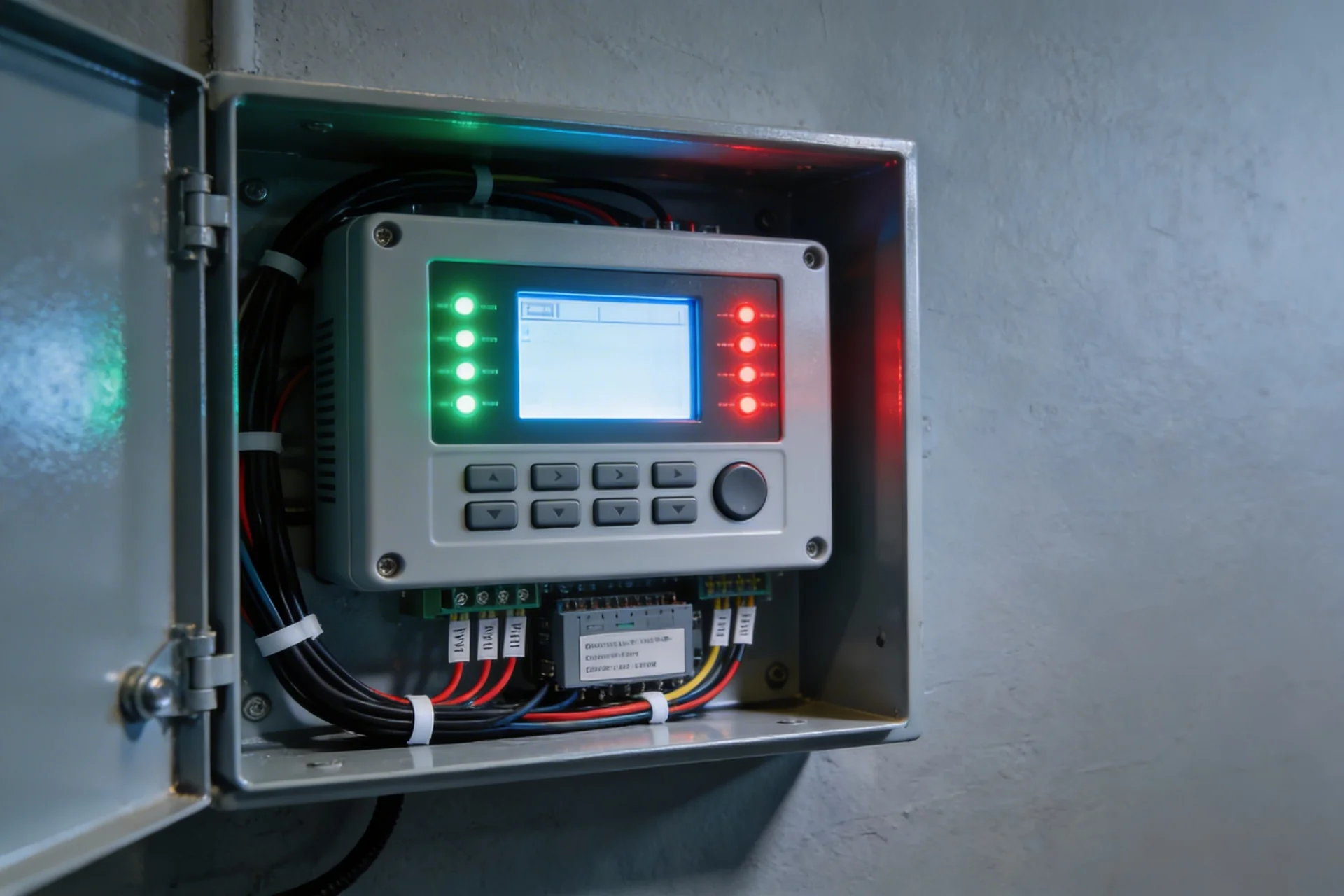
Intrusion Alarm System (SOS)


Working documentation: from 7 days
Price from 50000 roubles
We design intrusion alarm systems that provide early threat detection, automatic notification and reliable facility protection against unauthorised access.
AYU-Project develops intrusion alarm documentation with facility specifics, security standards, control points and alarm scenarios defined in advance. The system is designed for stable operation, real-time monitoring and fast notification of responsible personnel.
Intrusion alarm systems: integration, monitoring and reliable protection against unauthorised access
An intrusion alarm may be installed, but if detectors are placed incorrectly, an unauthorised entry attempt may not be detected. If the alarm is not integrated with video surveillance, the operator cannot immediately see what happened. If expansion was not considered at design stage, the system may need to be rebuilt when the facility grows.
These problems appear when an alarm system is designed without a detailed security scenario. We design intrusion alarms so that each detector works accurately, the system integrates with video monitoring and the architecture can expand with the facility.
What is a security alarm system?
A security alarm system is a complex of sensors (door and window opening sensors, infrared motion sensors, glass break sensors), control panels, warning devices and information transmission channels that provide intrusion detection and instant notification of responsible persons. IAS is integrated with an access control system and video surveillance into a single facility-security complex.
For manufacturing enterprises, warehouses, shopping centres, banks and public-sector facilities, IAS is a mandatory element of the security complex, often required by insurers and supervisory authorities.
Why does a poorly designed intrusion alarm fail to protect?
Professional security alarm design is critical to the actual effectiveness of the system. A superficial approach gives rise to characteristic problems:
- Sensor blind spots - incorrect placement of detectors leaves areas through which an attacker can pass unnoticed; the error is detected only during a real incident
- Isolation from other security systems - insufficient integration with ACS and video surveillance means that during an alarm the operator cannot instantly see what happened and in which zone; reaction is delayed
- False positives - incorrect selection of sensor types for room conditions leads to systematic false alarms; security stops responding to alerts and misses real threats
- Single point of failure - in the absence of redundancy of communication channels, a single failure blocks the entire warning system; the facility may remain unprotected without security staff noticing the failure
Proper design eliminates all these problems before installation.
Our approach to designing security alarm systems
- We design intrusion alarm systems around the facility - analyze the architecture of the building, determine critical zones and points of possible penetration, select types of sensors (infrared, magnetic contact, vibration, shock, glass break sensors) for each zone, taking into account lighting conditions and type of room, design a layout without blind spots
- We design alarm and automatic response scenarios - we integrate security alarm sensors into a single system with trigger logic; in the event of an alarm, the system automatically performs a set of measures: notifying security and the manager, activating high-quality video recording, blocking or opening doors according to the scenario
- We integrate alarm systems with video surveillance, access control and remote control - when the sensor is triggered, the system automatically switches the video stream to the operator’s monitors, executes a given scenario on the doors through the access control system, sends a notification to the manager’s mobile phone with the coordinates of the event
What is included in the design documentation for a security alarm system?
Design documentation stage - design documentation for expert review in accordance with Government Decree of the Russian Federation No. 87 dated 16.02.2008 No. 87 (as amended on 21.10.2025) “On the Composition of Design Documentation Sections and Requirements for Their Content”:
- Explanatory note describing the concept of facility protection, a list of threats of unauthorized access and ways to prevent them
- Block diagram of the system indicating the types of sensors, control panels, warning devices
- Floor plans for the placement of security alarm sensors, indicating their types and coverage areas
- Description of triggering scenarios and notification routes (to whom and how the signal goes in the event of an alarm)
- Calculation of an uninterruptible power supply for critical system components
- Equipment specification: types of sensors, manufacturers, brands of control panels
Working Documentation Stage (WD) - working documentation for the installation organization:
- Installation drawings with connection of sensors to building structures
- Cable laying diagrams and cable logs with wire length calculations
- Drawings of fastening units and protection of equipment from vandalism and damage
- Electrical connection diagrams for all system components
What standards are used to design a security alarm system?
The design of IAS is regulated by regulatory documents in the field of security alarms, integrated security and facility protection. AYU-Project carries out design strictly according to the current editions of the following documents:
- GOST R 52435-2015 “Technical means of security alarm. Classification. General technical requirements and test methods" - the main standard for security alarm systems, establishing the classification of security detectors, requirements for the sensitivity of sensors, their immunity to interference, operating conditions and test methods
- WD 78.145-93 Ministry of Internal Affairs of Russia “Systems and complexes of security, fire and security-fire alarm systems. Rules for the production and acceptance of work" - a regulatory framework for the design, installation and acceptance of security alarm systems; regulates the requirements for the composition of technical documentation and the procedure for putting the system into operation
- WD 78.36.003-2002 Ministry of Internal Affairs of Russia “Engineering and technical strength. Technical means of security. Requirements and design standards for protecting facilities against criminal attacks" - requirements for the selection of types and number of security detectors, their placement in the facility zones depending on the security category
- GOST R 53704-2009 “Security systems are comprehensive and integrated. General technical requirements" - the regulatory basis for the design of SOS as a component of an integrated security system in conjunction with access control systems and video surveillance; determines the requirements for interfaces and joint functioning logic
- GOST R 56602-2015 “Extra-low-voltage systems. Security systems and access control systems. Application Guide" - requirements for the design of security systems, laying cable routes, selection of cables and active equipment
- SP 484.1311500.2020 “Fire protection systems. Fire alarm systems and automation of fire protection systems. Design standards and rules" - regarding the integration of SOS with fire alarms and the design of combined security and fire complexes
- Government Decree of the Russian Federation No. 272 dated 25.03.2015 “On approval of requirements for anti-terrorism security of places where people are in large numbers” - establishes mandatory requirements for equipping facilities with large numbers of people with security alarm systems; used when designing IAS in shopping centres, sports facilities, train stations and other facilities with a high concentration of people
- Government Decree of the Russian Federation No. 87 dated 16.02.2008 No. 87 (as amended on 21.10.2025) “On the composition of sections of design documentation and requirements for their content” - regarding the structure and content of the section of security alarm systems as part of the design documentation of the facility
For banking institutions, the design of IAS additionally takes into account the requirements of the Bank of Russia for the protection of cash handling areas, vaults and ATM zones. For facilities storing explosives and other hazardous materials - Rostechnadzor requirements for security alarm systems at hazardous production facilities.
For which facilities is a security alarm system designed?
We develop security alarm systems for facilities of various purposes:
- industrial enterprises and production complexes with perimeter and critical premises control
- warehouse complexes and logistics centers with a high concentration of material assets
- shopping centres and chain stores with protection against theft and organized crime
- banking institutions and financial organizations with the requirements of the Central Bank of the Russian Federation for the level of protection
- public-sector and government facilities with increased security requirements
- residential complexes and high security facilities
- objects of cultural and historical significance
- educational and medical institutions
- sports facilities and crowded places
- transport infrastructure: train stations, airports, logistics terminals
Why does the construction business trust AYU-Project to design security alarm systems?
The main problem of most security alarm projects is the gap between the diagrams on paper and the real security of the facility. The sensors are placed according to the standard, but no one counted the blind spots. The alarm system is installed, but in the event of an alarm, the security does not know what to do - response scenarios are not included in the project. ACS and IAS are nearby, but not integrated. AYU-Project eliminates these situations at the design stage:
- Designing coverage areas without blind spots - for each protected zone, the type of detector is selected, the detection angle and response range are calculated; blind spots are eliminated analytically before installation
- Integration with related systems - IAS is designed in the same logic with ACS, VSS and fire alarm within one command; joint response scenarios are agreed upon between systems before documentation is released
- Compliance with regulatory framework and requirements - documentation is generated according to GOST R 52435-2015, WD 78.145-93, WD 78.36.003-2002 and Government Decree of the Russian Federation No. 87; for banking facilities - taking into account the requirements of Central Bank of the Russian Federation; Expert comments are eliminated free of charge as part of the contract
- Redundancy of communication channels and power supply - the project provides for backup alarm signal transmission channels and uninterruptible power supplies; the system remains operational if the main channel or power fails
- 8+ years of experience and proven qualifications - membership in SRO, specialists in the NOPRIZ registry, completed projects across Russia: from industrial enterprises and banks to shopping centres and public-sector facilities
How to order a project IAS: stages of work
-
Submit an enquiry - the consultation is free
Form on the website or phone: +7 (383) 375-73-77 / +7 (923) 743-73-77. Specify the type of object and the tasks of the security alarm. -
Receive a Commercial Proposal Within 1 Business Day
CP with scope of work, price and deadlines. When ordering SOS together with other systems, you get a discount. -
Approve the ToR and sign the contract
Stage of documentation, requirements of the insurer and security organization, security mode and required battery life UPS. -
Analysis of object architecture and vulnerabilities
Critical zones and penetration points: entrance groups, windows, stained glass windows, service entrances, perimeter. If necessary, a specialist visit. -
Selection of sensor types and arrangement design
Combination of sensors for each zone: magnetic contact, infrared, vibration, shock (glass breaking). Arrangement without blind spots according to threat scenarios. -
Development of notification and backup scenarios
Notification routes with order and signal transmission channels. Channel duplication (wired + radio link). Calculation of UPS for 8-24 hours of battery life. -
Development of DD/WD and transfer to the customer
Structural diagram, floor plans, warning diagrams, installation drawings with anti-vandal protection, cable logs, specifications. PDF and DWG. Expert comments are free.
Intrusion Alarm System Design Cost
| Scope of Work | Cost, rub. |
|---|---|
| Site inspection | Negotiable |
| Preparation of a commercial proposal (cost estimate) | Negotiable |
| Facility area, m2 | Cost, rub. |
|---|---|
| to 500 | 30 000 |
| 500 - 1000 | 52 000 |
| 1001 - 2000 | 68 000 |
| 2001 - 3000 | 75 000 |
| 3001 - 5000 | 84 000 |
| 5001 - 7000 | 101 000 |
| 7001 - 10000 | 114 000 |
| 10001 - 13000 | 138 000 |
| 13001 - 17000 | 152 000 |
| 17001 - 21000 | 162 000 |
| 21001 - 25000 | 185 000 |
Our Advantages


How We Work
Projects
Frequently Asked Questions
Basic standards: WD 78.145-93 (security alarms), WD 78.36.002-99 (technical security equipment), GOST R 56602-2015 (extra-low-voltage systems), SNiP 3.05.06-85 (electrical engineering). The documentation complies with Government Decree of the Russian Federation No. 87 (as amended on 21.10.2025).
DD - documentation for examination: block diagram, sensor layout plans, alert scenarios, UPS calculations. WD - detailed installation kit: drawings for connecting sensors to structures, vandalism protection units, cable logs. For commercial properties, a technical working design (DD+WD) is often sufficient.
Yes. If the main channel (wire line or radio line) is damaged or jammed, the system switches to the backup one. We design systems with duplication of channels, which guarantees reliable notification in case of any failures.
When the main power is turned off, the system switches to an uninterruptible power supply (IBP). When designing, we calculate the IBP capacity so that the system operates in alarm and notification mode for at least 8-24 hours, depending on the requirements of the facility.
Yes, if the system is designed with a reserve in the number of zones on the control panel. Adding new sensors to existing zones is done simply by connecting them. If there are not enough zones, the instrument equipment will need to be replaced - so we always design systems with redundancy.
The signal is sent to the control panel in the security organization, SMS and push notifications are simultaneously sent to the manager’s smartphone, the siren and light indication are turned on. When integrated with access control system, the system can automatically lock the doors.
Technically optional, but highly recommended. When the sensor is triggered, the system automatically switches the video recording to the highest quality in the area of interest and sends the video clip to the manager. This allows you to assess the situation in seconds, rather than manually searching for an entry in the archive.
Main types: magnetic contact sensors (opening doors and windows), infrared motion sensors (presence of people in the room), vibration sensors (burglary attempts), shock sensors (glass breaking). When designing, we select the optimal combination for a specific facility and its vulnerabilities.
Licences and Certificates


